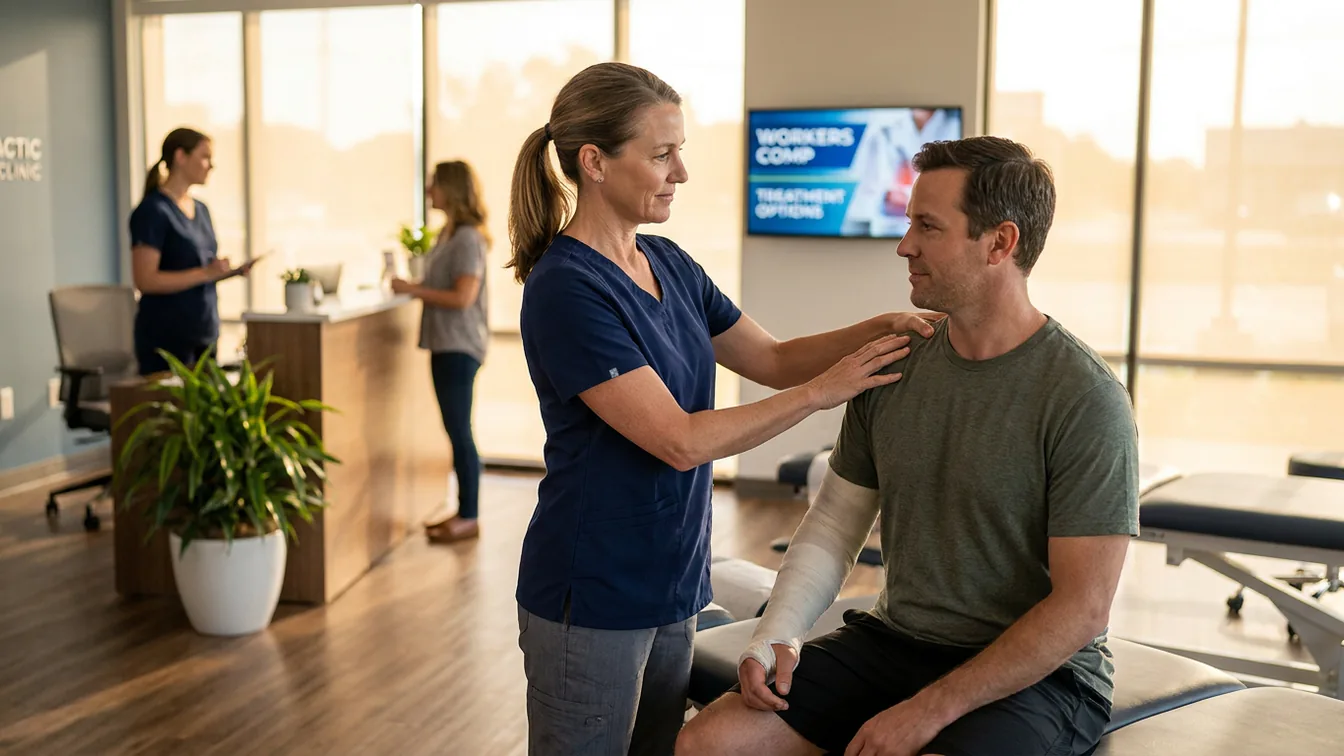
A workplace injury can turn an ordinary day into weeks or months of pain, paperwork, and uncertainty. One moment you are lifting a box, climbing a ladder, or typing at your desk. The next, you are dealing with a throbbing back, a stiff neck, or a shoulder that won't cooperate. On top of the physical discomfort, many injured workers feel overwhelmed by questions. Who do I see? What will be covered? What if my pain doesn't go away?
This guide walks through workers comp injuries: treatment options explained in plain language, so you can make confident decisions about your recovery. Whether you work in a warehouse, a hospital, an office, or on a job site, understanding your options is the first step toward getting your life back.
Common Workers Comp Injuries and Why Early Treatment Matters
Work-related injuries fall into two broad categories. The first is the sudden, acute injury, such as a slip and fall, a lifting strain, or a collision with equipment. The second is the gradual, repetitive injury that builds over time from the same motions or postures day after day.
Some of the most common injuries workers report include:
- Low back sprains and strains from lifting, bending, or twisting
- Neck and upper back pain from prolonged desk work or overhead tasks
- Whiplash-type injuries from vehicle accidents on the job
- Shoulder injuries, including rotator cuff strain and joint irritation
- Repetitive strain conditions in the wrists, elbows, and hands
- Knee and hip pain from standing, kneeling, or climbing
- Sciatica and nerve irritation linked to spinal misalignment or disc problems
Here in Canonsburg, many residents have jobs that are physically demanding. The Steel Valley heritage of Western Pennsylvania runs deep, and plenty of families in our area have worked in industrial, construction, and trade settings for generations. Those jobs build strong communities, but they also place real stress on the body.
One of the most common misconceptions is that you should "tough it out" and see if an injury improves on its own. Unfortunately, waiting often makes things worse. Minor strains can become chronic pain. Compensating for a sore back by shifting your weight can create new problems in your hips, knees, or neck. Early evaluation also creates a clear medical record that links your symptoms to a specific workplace event, which matters for your claim.
Understanding Your Treatment Options After a Work Injury
After an injury, you generally have several treatment options. The best plan often combines more than one approach, and it should be tailored to your diagnosis, your job demands, and your recovery goals.
Emergency and Urgent Care
If you have severe pain, loss of consciousness, signs of a fracture, significant bleeding, numbness or weakness in your limbs, or any symptom that feels like an emergency, go to the nearest emergency department right away. Facilities such as Washington County Hospital serve the broader region and can handle serious trauma. Your health always comes first, and you can sort out the paperwork afterward.
Primary Care and Occupational Medicine
Many employers direct injured workers to an occupational medicine provider or a primary care physician. These providers can diagnose the injury, order imaging such as X-rays or MRIs when appropriate, prescribe medication, and recommend work restrictions. They are often the first stop in the workers comp process.
Physical Therapy and Rehabilitation
Physical therapy uses guided exercises, stretching, and strengthening to restore movement and function. It can be especially helpful after a surgery or a significant strain. A good rehabilitation plan teaches you how to move safely so you can return to your job without re-injury.
Chiropractic Care
Chiropractic care is a drug-free, hands-on approach that focuses on the spine, joints, and nervous system. For many workers with back pain, neck pain, headaches, and joint restrictions, it is a valuable part of recovery. Treatment may include:
- Spinal adjustments to restore joint motion and reduce irritation
- Soft tissue therapy to ease muscle tension and spasms
- Therapeutic exercises to rebuild strength and stability
- Posture and ergonomic coaching to reduce strain at work
- Guidance on activity modification during healing
The goal is not just to quiet the pain but to address the underlying mechanical problem so it is less likely to return. For people who prefer natural options over long-term reliance on medication, chiropractic care can be an appealing choice.
Specialists and Surgery
Some injuries, such as severe disc herniations, complete tendon tears, or fractures, require a specialist's care. An orthopedic surgeon or pain management physician may be involved. Most work-related musculoskeletal injuries, however, respond well to conservative care first, and surgery is usually considered only when those approaches do not provide enough relief.
Navigating the Workers Comp Process in Pennsylvania
Understanding the basic steps can reduce stress and help protect your rights. The details vary with your employer, your insurer, and the specifics of your case, so treat the following as general education rather than legal advice.
1. Report your injury promptly. In Pennsylvania, workers are generally expected to notify their employer as soon as possible. Waiting too long can jeopardize your claim. Put the report in writing when you can, and keep a copy for your records.
2. Ask about your employer's provider panel. Pennsylvania has specific rules about choosing a treating provider. Employers can post a list of designated providers, and if the list meets the state's requirements, workers may be expected to treat with providers from that list for an initial period after the injury. After that window, you generally have more freedom to choose your own provider. If your employer has not posted a valid list, you may have broader choice from the start. Ask your supervisor or human resources department for clear information, and consider speaking with a workers comp attorney if anything is confusing.
3. Describe your symptoms fully and consistently. Tell every provider exactly how the injury happened and which body parts hurt, even if some symptoms seem minor. Pain in your neck that shows up two days after a lifting incident is still part of the story.
4. Follow your treatment plan. Gaps in care, missed appointments, or ignoring work restrictions can slow your recovery and may be used to question your claim. Consistency is good for your body and your paperwork.
5. Keep detailed records. Save medical bills, visit summaries, work restriction notes, and any correspondence with your employer or the insurance company. A simple daily pain journal can also help your providers adjust your care.
Common Concerns Answered
"Will seeing a chiropractor hurt my claim?" Not at all when it is done properly. What matters is that the care is documented, medically appropriate, and consistent with the rules that apply to your claim. Confirm provider requirements before you start, so you do not run into surprises.
"What if I feel better after a few visits?" That is encouraging, but pain relief does not always mean the injury has fully healed. Completing your recommended plan helps tissues recover and lowers the risk of a flare-up.
"Can I keep working?" Often yes, with modifications. Light duty, shorter shifts, or temporary restrictions on lifting can let you stay productive while you heal. Follow the restrictions your provider gives you.
Practical Steps You Can Take Right Now
While you sort out your claim and your care, these simple strategies can support your recovery:
- Move gently. Complete bed rest usually slows healing. Short, comfortable walks help circulation and reduce stiffness.
- Use ice and heat wisely. Ice can help during the first 48 hours to manage swelling and sharp pain. Heat can ease muscle tightness afterward.
- Check your workstation. Keep your screen at eye level, support your lower back, and keep frequently used items within easy reach.
- Lift smart. Bend at the hips and knees, keep the load close to your body, and avoid twisting while carrying.
- Take micro-breaks. Standing, stretching, and changing positions every 30 to 45 minutes reduces repetitive strain.
- Sleep supportively. Try a pillow between your knees if you sleep on your side, or under your knees if you sleep on your back.
- Do not ignore warning signs. Seek prompt medical attention for worsening numbness, weakness, loss of bladder or bowel control, fever with back pain, or pain that is severe and unrelenting.
Local Care for Local Workers
Recovering from a work injury is easier when you have a care team that listens, explains your diagnosis clearly, and focuses on getting you back to the activities you value. Canonsburg residents, along with neighbors from Mount Lebanon and Upper St. Clair, often tell us the same thing: they want to heal without feeling rushed or confused by the process.
At Burgman Chiropractic Clinic P.C., our Canonsburg clinic takes a patient-centered approach to musculoskeletal pain. We evaluate how your injury happened, examine how your spine and joints are moving, and build a care plan around your needs and your job demands. If you are wondering how chiropractic care might fit into your workers comp situation, we are happy to answer your questions and help you understand your next steps.
You do not have to navigate a work injury alone. If you are dealing with back pain, neck pain, joint pain, or any other symptoms after an accident on the job, reach out today. Early, appropriate care can make a meaningful difference in how quickly and completely you recover.
Visit us at Burgman Chiropractic Clinic P.C., 4050 Washington Road, Suite 5C, Canonsburg, PA 15317, and take the first step toward natural, effective relief.